Following the Meandering Writing Path

I was walking with my daughter this morning. It was one of those mornings, you know the type: birds singing their little hearts out, the distant rumble of a lawn mower eating its breakfast, a faint scent of petrichor where an unruly sprinkler showers the sidewalk, and, last but not least, the gentle sun, just waking up, its embrace soft and inviting. This is not always the case in Central Oregon on a July morning. Often the sun bores down on you with an intensity that threatens to send you racing for cover and roasts the little birdies, silencing their songs. On those kinds of mornings, the lawn mowers remain hungry, and the water evaporates before it ever hits the sizzling concrete. Not this morning, however. This morning beckoned me to sit on my back porch with a mimosa and my writing journal. Instead, my partner announced that it was a perfect morning for washing his truck and requested that the family keep him company out front.

I can assure you that there is no such thing as a perfect morning for washing anything. There was no grumbling, though. Okay, there was very little grumbling, a minuscule amount. We paraded out to keep that man company while he scrubbed his precious truck (is it wrong to be jealous of an inanimate object?). Luckily, my daughter saved me from the tedium of watching my partner as he behaved like an adult. The advantage of having young children is that now I have an excuse for wandering aimlessly while my mind races through the different plot lines, narratives, and wild fantasies that take root and grow there. As we meandered and I watched the pipsqueak flutter from flower to concrete crack to mystery objects lying on the ground, I realized that my mind operated similarly.

Many a year was misspent railing against the way my brain pieces things together. In school we are taught that the introduction must come first, then you write the body and finally the conclusion. Things must be done linearly, or they are not correct. This black and white way of thinking got to me and, for a while, I thought I was stupid. My brain does not function in a linear manner, and when I attempt to force it, the damned thing shuts down. It’s like trying to fit the Hulk into a Geo Metro, no matter how you try, it just isn’t going to happen.

I have often been envious of my partner’s brain; it is so freaking linear and grown up. Everything has a place; thoughts have a logical progression and order. He’s the kind of person who mows his lawn in tidy little rows. I’m serious. I am not allowed to touch the lawn mower.

If his brain works in perfect, tidy lines, mine is a chaotic jumble of rapid-fire, seemingly random thoughts. My brain doesn’t like lines. Thoughts fly by in all manner of anarchy, leaving me breathless and a bit overwhelmed.

Lately, I have learned to embrace, rather than fight against my brain, and this has made all the difference. Here’s what I learned:

  • Start wherever you want to, just because it is the beginning does not mean that it must be written first. Write in any way that works for you.
  • Let your brain get distracted. If it leads you down an unrelated path, follow it. You might find beauty waiting that you would otherwise have overlooked.
  • Consider a nonlinear format for your writing, but make sure you do so with purpose and intent. Author Clayton Lindemuth has more to say about this kind of writing.
  • Don’t force it. If your brain stalls, give it a break. Go for a walk, stop, and look at that pebble you would otherwise have ignored. Watch the way the birds circle on a warm afternoon. Notice the person walking past you and try to guess their story. You’ll be surprised what will jumpstart your brain again.

What is important is writing.

Photo by Lili Popper on Unsplash

How to Plot a Story: A Beginner’s Guide

Plotting a story can be a daunting task, especially if you’re new to writing. However, with a few simple steps, you can create a compelling plot that keeps your readers engaged from beginning to end. Here’s how:

Step 1: Define Your Protagonist and Their Goal

The protagonist is the main character of your story, and their goal is what drives the plot forward. The goal should be specific and achievable, and it should be something that your readers can root for. For example, if your protagonist is a detective, their goal might be to solve a murder case.

Step 2: Create Conflict

Conflict is what makes a story interesting. It’s what keeps readers on the edge of their seats, wondering what will happen next. There are many ways to create conflict in a story, but one of the most common is to introduce an antagonist. The antagonist is the character who opposes the protagonist and their goal. They can be a person, a group of people, or even a force of nature.

Step 3: Develop the Plot

Once you have your protagonist, their goal, and the conflict, it’s time to develop the plot. The plot is the series of events that make up the story. It should be structured in a way that keeps the reader engaged and builds tension as the story progresses. One common plot structure is the three-act structure, which consists of the setup, the confrontation, and the resolution.

Step 4: Add Subplots

Subplots are secondary storylines that run parallel to the main plot. They can add depth to your story and help to develop your characters. However, be careful not to overload your story with too many subplots, as this can confuse your readers and detract from the main plot.

Step 5: Write the Climax and Resolution

The climax is the point of highest tension in the story. It’s where the protagonist and antagonist face off, and the outcome of the conflict is decided. The resolution is the aftermath of the climax, where loose ends are tied up and the story comes to a close.

Step 6: Edit and Revise

Once you have a complete draft of your story, it’s time to edit and revise. Look for plot holes, inconsistencies, and areas where the story could be tightened up. Get feedback from beta readers or a writing group, and make changes as needed.

With these steps, you can create a well-plotted story that will keep your readers engaged and entertained. Remember, the most important thing is to have fun and enjoy the writing process!

Photo by Ugo Mendes Donelli on Unsplash

Inappropriate Purchases and Writing Styles: The Indecisive Shopper

​​Today we take a look at the indecisive shopper! Writers are a lot like shoppers, and the writing process is a hell of a lot like shopping. Your writing process says a lot about how and what you will write, and it dramatically influences your voice. The beauty here is that there is no right or wrong as long as you write in your way. Try to write like someone else, and you will fail. Note: many of us have more than one style influencing us! 

The Indecisive Shopper

The Indecisive shopper wanders the aisles, places things in their cart, panics, and then ditches everything and runs from the store. This kind of writer has difficulty figuring out what they want to write and how they want to write it. Often, they have dozens of half-started manuscripts lying around (I have 28 half-started and probably another 15 outlines that never grew into anything). This is a common writing style for all new writers, regardless of any other styles you fall into. The indecisive shopper is a formative stage or one we get stuck in when we don’t quite know where we are going. As a result, I have not listed the pros or cons for this, only some tips to get you out of the rut.

Tips

  • Start by completing a thorough character sketch for your protagonist and antagonist. Having a good backstory and idea of who they are can give you direction for the story. Here’s yet another website with info on how to do this: http://www.fiction-writers-mentor.com/writing-character-sketches/
  • Try the “if this, then what” format for creating a basic outline for your story or a scene. You could create multiple branches on this and follow several what-ifs and then choose the branch that creates the most conflict. If my character loses her purse, what happens next? She’s driving down the road and has an asthma attack, but her inhaler is in her bag. Then what? She keeps an extra inhaler in the glove box, so she reaches for that, causing her to swerve on the road. Then what? She drops the inhaler when her tire hits the gravel on the side of the road? Then what? She manages to get her inhaler, but she gets pulled over because she’s driving erratically. Then what? (see how you could keep going?)
  • Keep a “Cut Document” to save parts that you cut out of your writing, just in case.

That wraps up my dialogue about writing style! I will leave you with one final thought before I go:

All good writing helps us understand ourselves and humanity. It grapples with the big questions, even if it cannot answer them. Strong words evoke passion before our brains even make sense of the lines. For that’s what good writing does: make us feel and, through that emotion, make us think.

Inappropriate Purchases and Writing Styles: The Stingy Shopper

​​Today we take a look at the stingy shopper! Writers are a lot like shoppers, and the writing process is a hell of a lot like shopping. Your writing process says a lot about how and what you will write, and it dramatically influences your voice. The beauty here is that there is no right or wrong as long as you write in your way. Try to write like someone else, and you will fail. Note: many of us have more than one style influencing us! 

The Stingy Shopper

Like the premeditator, everything the stingy shopper puts onto the page is deliberate and planned. The stingy shopper does not like extra things, though. If they had a mantra, it would be “Just the facts, ma’am.” This type of writer is all about bones and subtext, and a lot is implied. Often, these are some of the most fun works to read if you’re up to the challenge because they engage you more as a reader.

Pros: Falling into the “sentimental” classification of writing (see Orhan Pamuk’s book, The Naive and the Sentimental Novelist, for more on this), the stingy shopper counts on his or her structure and method to help tell the story. Hemingway’s novels are an excellent example of compact, surface type of writing. If there is a more straightforward way to say something, that is how it is written. His writing creates a surface, but there is depth, unsaid but implied. Read “The Old Man at the Bridge” to better understand this stingy (but beautiful) writing.

Cons: Sometimes, too much gets cut, and the writing becomes flat and difficult to understand. These writers often are accused of taking the emotion out of the story, although if done correctly, the emotion becomes part of the subtext. If you are shooting for a lengthy manuscript, you will struggle. Need some inspiration? Check out Brevity: A Journal of Concise Literary Nonfiction.

Tips:

  • If you are going to write in this style, you have to be deliberate. Everything you include must be intentional.
  • Practice showing instead of telling.
  • Preplan your subtext. What do you want your readers to intuit? What are you trying to build beneath the surface of your writing?

Inappropriate Purchases and Writing Styles: The Premeditator

​​Today we take a look at the premeditator! Writers are a lot like shoppers, and the writing process is a hell of a lot like shopping. Your writing process says a lot about how and what you will write, and it greatly influences your voice. The beauty here is that there is no right or wrong as long as you write in your way. Try to write like someone else, and you will fail. Note: many of us have more than one style influencing us!

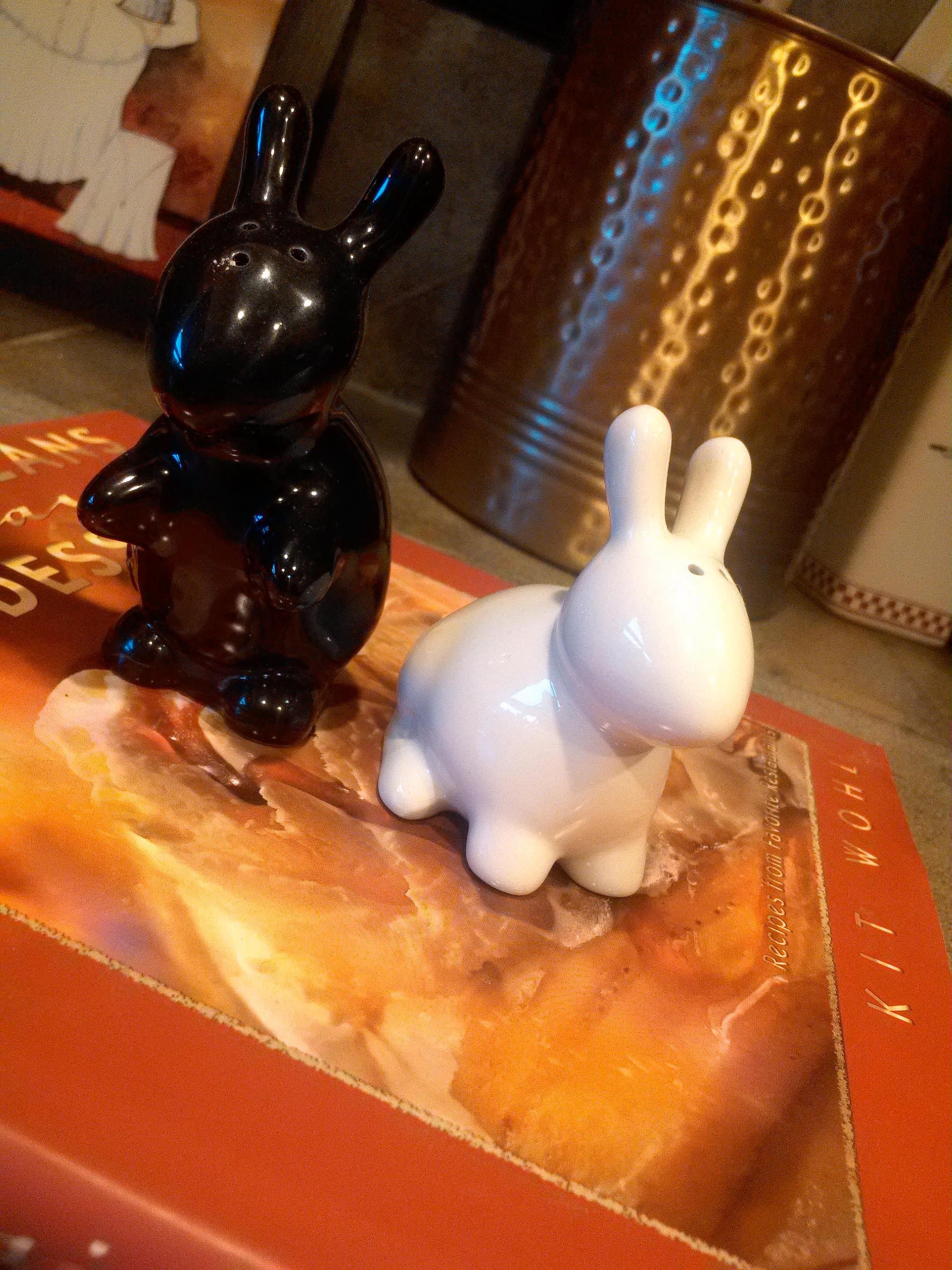
A few days ago, I graced you with my intellectual story about salt and pepper shakers (Remember: Mr. Muscles). I imparted the story about my partner refusing to let me buy the most amazing salt and pepper shaker in the galaxy. Revenge was served briefly afterward when my cousin bought me these lovely salt and pepper shakers.

KIMG0414
KIMG0415

My partner lies somewhere between the premeditator and the stingy shopper (tomorrow’s writing style). That man will spend weeks planning a purchase, shopping around online, reading up on what he’s planning on buying, and quizzing friends. He hates spending money. I swear he’s the lovechild of Scrooge and Spock. He’s constantly looking at me, raising one eyebrow and murmuring “I find that highly illogical.” If he were a writer, he would definitely have a meticulous and thorough outline for his story.

The Premeditator

If you are a premeditator, then you have a plan for your novel well before you start writing. Premeditators will spend a considerable amount of time organizing, pre-writing, structuring, researching, and outlining their story. Often, the premeditator does not end up with a ton of drafts. They put so much effort into getting it right the first time that they don’t have to do a lot of editing.

Pros: Falling into the “sentimental” classification of writing (see Orhan Pamuk’s book, The Naive and the Sentimental Novelist for more on this), the premeditator puts a tremendous amount of thought into the method and techniques used to create the story. Faulkner is an excellent example of the kind of forethought that goes into his writing process. In The Sound and The Fury he is careful to depict the novel as accurately as possible through his narrators and the structure varies differently as the POV moves from one character to the next.

Cons: Improvision can be tough for the premeditator. When they get stuck, they really get stuck. Sometimes the deliberateness with which they write can make their story sound artificial and hollow, so they need to be careful not to be too rigid. Also, their writing process takes quite a bit of time and effort. I had a friend in graduate school who would spend hours just searching for the right word. Need some inspiration? Try out Eliot’s The Hollow Men or check out Shakespeare’s “Sonnet 116: Let me not to the marriage of true minds”.

Tips:

  • Spend some time refining your process and eliminating the pieces that don’t contribute to your writing. Do you benefit from a character sketch? Do you find an outline essential? Do you diagram each scene before writing it? Find what works, ditch what doesn’t.
  • Try not to get stuck on words/structure/stuff you can go back and edit later. Create a tag for your writing so that you can easily find those parts, and then let it go and keep writing (breathing exercises might help with this).
  • There are some great worksheets and templates for diagraming, organizing and planning. Here are a couple of sites to get you started:

Inappropriate Purchases and Writing Styles: The Browser

Today we continue the series about writing styles! Writers are a lot like shoppers, and the writing process is a hell of a lot like shopping. Your writing process says a lot about how and what you will write, and it greatly influences your voice. The beauty here is that there is no right or wrong as long as you write in your way. Try to write like someone else, and you will fail. Note: many of us have more than one style influencing us! Today let’s check out the browser!

The Browser

For the browser, writing is an opportunity to take everything in. They view writing as an excuse to explore the world, and they slowly meander through their writing just as they do life, exploring the quality of light as it filters in the window and the texture of a nectarine against their lips. Writing is a daily essential for these writers, and it is one way in which they process their experiences and assign meaning and emotion to their sensations.

Pros: Falling into the “naive” classification of writing along with the impulse shopper (see Orhan Pamuk’s book, The Naive and the Sentimental Novelist for more on this), these folks have a way of capturing the things others so often take for granted. The browser can provide readers with a sensual glimpse through their eyes. Few other writers can capture so vividly the world around them. Looking for inspiration in this type of writing? Check out Virginia Woolf’s To the Lighthouse or Marcel Proust’s In Search of Lost Time.

Cons: The browsers have a hard time keeping it short and sweet. Because these people feel so committed to their senses, they tend to write exhaustively. In Search of Lost Time is an example of this, and Proust only gets away with writing this 7-volume, million-word novel because he’s a master. The delete button is this writer’s best friend. As Antoine de Saint-Exupery says, “A designer knows he has achieved perfection not when there is nothing left to add, but when there is nothing left to take away.”

Tips:

  • Make time for sifting through your experiences every day. Don’t worry about forming them into something meaningful, just write.
  • Find a trusted adviser when you are forming your prose, someone who can help advise you what you need to cut, but always save the original and trust your gut!
  • Embrace your need to record everything. You can go back and edit things out later. The best advice on this comes from Natalie Goldberg in her book, Writing Down the Bones:
    • “Our sense by themselves are dumb. They take in experience, but they need the richness of sifting for a while through our consciousness and through our whole bodies. I call this ‘composting.’ Our bodies are garbage heaps: we collect experience, and from the decomposition of the thrown-out eggshells, spinach leaves, coffee grinds, and old steak bones of our minds come nitrogen, heat, and very fertile soil. Out of this fertile soil bloom our poems and stories. But this does not come all at once. It takes time. Continue to turn over and over the organic details of your life until some of them fall through the garbage of discursive thoughts to the solid ground of black soil.”

Tomorrow I will post about the premeditator. For now, I will leave you with this thought:

Each thing you add to your story is a drop of paint falling into clear water; it spreads through and colors everything.”

Lisa Cron

Inappropriate Purchases and Writing Styles: The Impulse Shopper

I wandered through Seaside, Oregon, on an unusually hot and muggy day. Now, on the coast, hot and muggy go hand in hand, but we have the good fortune in the Pacific Northwest to not have many unbearably hot days where the ocean meets land. Jump over the Cascades, and it is an entirely different matter. On that particular day, the fog had completely burned off, but salty dampness clung to me, and I decided that I needed to escape the streets before my hair turned into a curly mess. If I stay too long in humid weather, I begin to look like Weird Al Yankovic.

muscle man

As I wandered through the narrow aisles of the shop I’d darted into, my mind flew into chaos. Sometimes I wish I could establish a writing studio amid such a bustling shop, letting my mind jump from curio to nick-nack while strange thoughts bubble through my head. Often I feel giddy as I study each object and imagine the kind of person who might pick it up, hold it to the light, consider it, and then carry it off to the register.  If you are wondering what kind of person I would be, let me show you the object I desired most in that small shop. –>

Isn’t it beautiful? I immediately texted my partner to show him the treasure I had found. The exchange went something like this:

Me: Look at this!

My Partner: What the hell is that?

Me: A salt and pepper shaker. We need a new one.

My Partner: No.

Me: I’m buying it!

My Partner: Don’t you dare. If you bring that thing home, I’m selling all of your books. All of them. Every single last one. I’m serious.

I hate it when he says hurtful things like I’ll sell your books, or There’s no room in our house for one more thing. As a result, I passed on buying that fantastic artwork, which I regret to this day. Revenge was served when a cousin bought me a mating bunny salt and pepper shakers. He glowers whenever I bring them out, and those cold eyes spit daggers at me. Before you get all defensive on his behalf, let me point out that he knew I was like this before we swore to live the rest of our lives together.

What does all of this have to do with writing? Well, writers are a lot like shoppers, and the writing process is a hell of a lot like shopping. Your writing process says a lot about how and what you will write, and it greatly influences your voice. The beauty here is that there is no right or wrong, as long as you write in your way. Try to write like someone else, and you will fail. Note: many of us have more than one influencing us! Today let’s chat about the impulse shopper!

The Impulse Shopper

These folks (and I am totally one of them) like to meander and take everything in. But, if inspiration hits them, everyone had better watch out. They dig into projects with a zeal that borders on obsessive (if we’re honest with ourselves, all writers border on obsessive, it just looks different for each writer). This happened to me last spring. My story suddenly coalesced in my mind, and before I knew it, it was July, and I had hardly spoken a word to friends and family save for those who were tenacious enough to rouse me out of my writing fugue long enough to urge a line or two of dialogue from me.

Pros: Falling into the “naive” classification of writing (see Orhan Pamuk’s book, The Naive and the Sentimental Novelist for more on this), the impulse shopper tends to intuit the nature of what he or she sees and translate that into words that capture the moment and immerse the reader into the image created with the words on the page. Think Romantic Era writers like Coleridge (Kubla Khan, anyone?). These writers are inspired by the world around them and capture that inspiration in a way few others manage.

Cons: Impulse shoppers tend to get off on tangents and often write in a very non-linear fashion. Fragmentation is excellent if you are Faulkner, but as a college professor once told me, you must channel that chaos and write intentionally, which can be tricky. Finding a trusted editor to curtail your impulsiveness and ensure you are deliberate and intentional in your writing is critical. Need some inspiration? Try out Faulkner’s As I Lay Dying, or check out Judy Ruiz’s Oranges and Sweet Sister Boy.

Tips:

  • Carry a notebook or device with you everywhere so that when the muse hits, you can capture those thoughts rather than losing them to the wind.
  • Pay attention to the things that seem to inspire your mind and surround yourself with them.
  • Don’t worry about quality when you are caught in the moment. Use those times when you are waiting for inspiration to go back and edit your work.

Late Nights with Whiskey and The Bell Jar

So, you know those moments when you clear your calendar so that you can get a bunch of work done? In my case, those days never work. Not ever. Not even once. Do you want to know the pathetic part?  I still attempt them. Instead, I wind up doing something off-task and strange in my quest to avoid whatever I am supposed to be doing. I may have a slight procrastination problem. A few Halloweens ago, I went to work as Procrastination Woman (I saved the day at the very last second).

There was the time I needed to work on storyboarding my book, and this happened:

Rusty

I don’t think Rusty ever forgave me for my transgressions that night. I also ate all of Santa’s cookies. Come to think of it, I might have more than just a procrastination problem.

And then there was the great wine balancing debacle of 2013. And the time that I dressed my son as a Dalek using only cardboard boxes and the shipping foam for my work computer (turns out I would need that shipping foam for work, whoops!). And the time…Oh well, you get the point.

Back to The Bell Jar and Whiskey. My partner pulled a 48-hour shift recently, so I knew the opportunity for some focused work time was upon me. Hah! See how I used the word focused there. I can be self-deluded sometimes. Anyway, I settled in to buckle down and finish editing my manuscript.

The next thing I knew, it was 4 a.m., and I was turning the last page of The Bell Jar while sipping my third tumbler of whiskey. So here it is, I am finally going to give you my official review.

I loved it, plain and simple. For those of you who aren’t familiar with the book, Sylvia Plath’s The Bell Jar is about her struggles with writing and existing as a woman in a male dominant world. The narrative follows her descent into depression and subsequent suicide attempt. When I spoke to others before reading it, they often described the book as sad and I put if off for quite a while. However, the first emotion that danced in my heart when I finally put the tome down was hope.

The bell jar symbolizes not only her struggle with depression but also the stifling effect of not fitting into the role that society has predetermined for you. At one point Plath begins listing all of the things she should be able to do, but can’t. This list marks the beginning of her descent, her realization that she was inadequate for the role of a woman. At that point, there was no freaking way I could put down the book. In my head spun all the times I’d tallied up my inadequacies and realized that I just didn’t want to fix them. It is hard growing up in a society with rigid ideas of what gender and know that you don’t quite fit into that role. I drink whiskey, play rugby, loathe crafting with my children, hate baking and only occasionally wear makeup. There are most assuredly days when my husband wishes he’d gone for trophy wife instead of for love.

Not only is the storyline relevant and compelling, but the writing is just freaking beautiful. I read this novel twice so that I could go back and study the way that Plath puts together her dialogue and imagery and the second time I got swept away just as quickly as the first.

For those of us who have experienced what it is like to be trapped under a bell jar, breathing that stale air and suffocating, this read will be poignant and liberating. Those who have never dealt with mental illness, marginalization, or inadequacy will find this an enlightening and stirring read.

Overall: 5 out of 5 stars!

Photo by Matthieu Staelen on Unsplash

The day in which I steal a pen from a church and promptly go to hell.

We all have fears. They eat away at us, a little bit at a time. I decided to share my writing journal today, the spiral notebook one, the one I never share with anybody. Ever. I’m sharing because it is a part of who I am as a writer and I want you to see how oddly disjointed, alone and utterly afraid I can be. Why? So that you will know that you are not alone in this crazy world. Scattered in among the journal entry, you will find some writing prompts, tips, and motivational quotes. So here it goes…

February 28th, 2016

In which I steal a pen from a church and promptly go to hell.

Read some Keats yesterday. It was lovely.

Faded stone pavers cut a pale swath through mown grass and the occasional bare spots where packed, dark soil defiantly stares up at passers-by. Towering pines stand guardian amid bushy oaks and dancing maples. The grass spread down rolling hills, halting against bark chips that mark what was once another faded paver pathway. Beyond those tan chips, the ground gives way to smooth water meandering lazily below a topaz sky.

A year of writing dangerously day 1, First Lines:

It is not always the first lines that get me. Every day is different. Often times it is not the starting, so much as the continuing. Sometimes the words flow as mightily as the Columbia River, smooth and swift, without effort, and I am swept along my narrative without a fear or a care. other times I am born on the Deschutes River, over bumpy and terrifying rapids that threaten to overturn my confidence. In these moments the roar of the water screams, “Give up! Can’t you see your writing sucks? Burn it and walk away.” I am terrified that I might drown.

At other times I am plodding along the old irrigation canal in mid-winter. there is no flow and I must struggle along on my own efforts to make any progress. Occasionally I will encounter a pool of water, but to plumb its depth I must first break through the obscuring ice.

“Write what disturbs you, what you fear, what you have not been willing to speak about. Be willing to split open.”

–Natalie Goldberg, Writing Down the Bones: Freeing the Writer Within.

Writing Down the Bones, Pg. 36:

  1. The light that drifts in from the doorway is milky. Shadows are softer because the light is indirect. It makes the entry feel young and cold. The tone is blueish, as if the sky has descended to reside in the house. This is not the kind of light for basking in. It is as if the heavy winds buffeting the house have also swept away the sun’s brightness until only a dull luminosity remains, painting the walls in a soft glow and easing the sharp lines of the shadows.

“I write because I am alone and move through the world alone. No one will know what has passed through me… I write because there are stories that people have forgotten to tell, because I am a woman trying to stand up in my life… I write out of hurt and how to make hurt okay; how to make myself strong and come home, and it may be the only real home I’ll ever have.”

–Natalie Goldberg, Writing Down the Bones: Freeing the Writer Within

Photo by Andrew Bain on Unsplash

Strange Things I Stumbled Upon During Late-Night Book Research

1. Before his film career, Benedict Cumberbatch earned a living posing with prehistoric animals for size comparison.

2. This is what if feels like to be stung by a box jellyfish.

3. I learned if a crow can fly with peacock feathers (also, this guy is adorable!)

4. When you google images for things which are orange, Donald Trump comes up. I just snorted my gin and tonic (ouch). Also, do you think that it would be okay to describe a beast’s eyes and Trump Orange: The creature towered over her, his large muzzle dripping foam from where jagged teeth broke through mottled grey lips. Orange, hellish eyes, the color of Donald Trump’s skin, glowered at her, irises aflame with an inner light.

Blog at WordPress.com.

Up ↑